
If you’ve ever watched your kid spend twenty straight minutes inspecting a roly-poly and joked, “Honestly, that’s probably more science than I learned in middle school,” you might already understand unschooling better than you think.
Unschooling is less about tossing all structure into the wind and more about letting curiosity take the lead. Think of it as education’s cozy cardigan era – soft edges, pockets full of interesting finds, and absolutely no itchy tags.
And, despite what the internet sometimes whispers, unschooling doesn’t have to be extreme or strict (yes, strict about being non-strict is an irony we can all chuckle at). You can ease into it, blend it, bend it, and make it your own.
Let’s sit down with a warm mug and talk about what unschooling can look like. Gently, practically, and with a lot less pressure than you might expect.

What Is Unschooling, Really?
At its simplest, unschooling is a learning approach built around a child’s natural interests. Instead of top-down lessons, kids explore the world through curiosity-led experiences. Baking bread becomes math and chemistry, planting tomatoes becomes biology, and building a LEGO zipline becomes… well, a surprising amount of physics and emotional resilience.
If traditional school is a structured path with signposts, unschooling is more like a meandering forest trail where the mushrooms and moss insist on becoming the real curriculum.
And here’s the secret a lot of folks don’t say out loud:
You do not have to fully commit to 24/7, radical, no-schedule-ever unschooling to benefit from it.
You can adopt the mindset without uprooting your life.
A Not-So-Strict Philosophy (Promise.)
Some people imagine unschooling as children running feral through meadows while parents shrug from afar. Charming visual, sure, but wildly inaccurate.
The “gentle” version looks more like this:
- You notice what your child naturally gravitates toward.
For example, my kid used to play games when he was about 5 (we often played together as a family). In these games, he would be required to read something to understand what was going on. He couldn’t read. This led naturally to his desire to know how to read, which led to me starting phonics with him. He learned to read very quickly and is now, at 11, ahead of kids his age in reading. It all started with desire and willingness to learn. - You create opportunities for deeper exploration.
Library trips. Nature walks. Museums. Cardboard boxes stacked into a “post office” in the living room. Random items left on the table for exploring. Support in whatever they find interesting. - You offer structure when it helps, flexibility when it doesn’t.
Because yes, some kids love charts and checklists. Most? Prefer vibes.
Unschooling isn’t anarchy. It’s responsiveness. It’s choosing connection over control and recognizing that genuine learning sticks best when it’s meaningful to the learner.

But… What About “Real” Skills?
Ah yes, the classic concern, usually delivered with a raised eyebrow and the energy of someone picturing a feral math-less child bartering acorns in adulthood.
Here’s the reassuring truth:
Kids pick up real-world skills naturally when they’re allowed to live in the real world.
A few unschooling-inspired examples:
- Math sneaks in through baking, allowance budgeting, Pokémon stats, Minecraft builds, measuring furniture, figuring out the better deal on gummy bears, and saving chore money for bigger purchases.
- Reading grows from graphic novels, recipe instructions, game dialogue, comic strips, and the sheer motivation to read whatever they’re deeply into. Reading opens the door to everything.
- Science is basically everywhere. Melting ice, sprouting seeds, kitchen experiments, catapult-building that you pretend not to be nervous about.
- Social skills bloom when kids collaborate in meetup groups, negotiate turns at the park, ask questions, help younger siblings, and engage with the world beyond a class filled with worksheets. And most homeschooled kids communicate better with all ages rather than just their peers because they are exposed to all ages.
If anything, unschooling reminds us that learning is not something we must artificially insert into life. It’s the substance life is made of.

A Tiny Anecdote While We’re Here
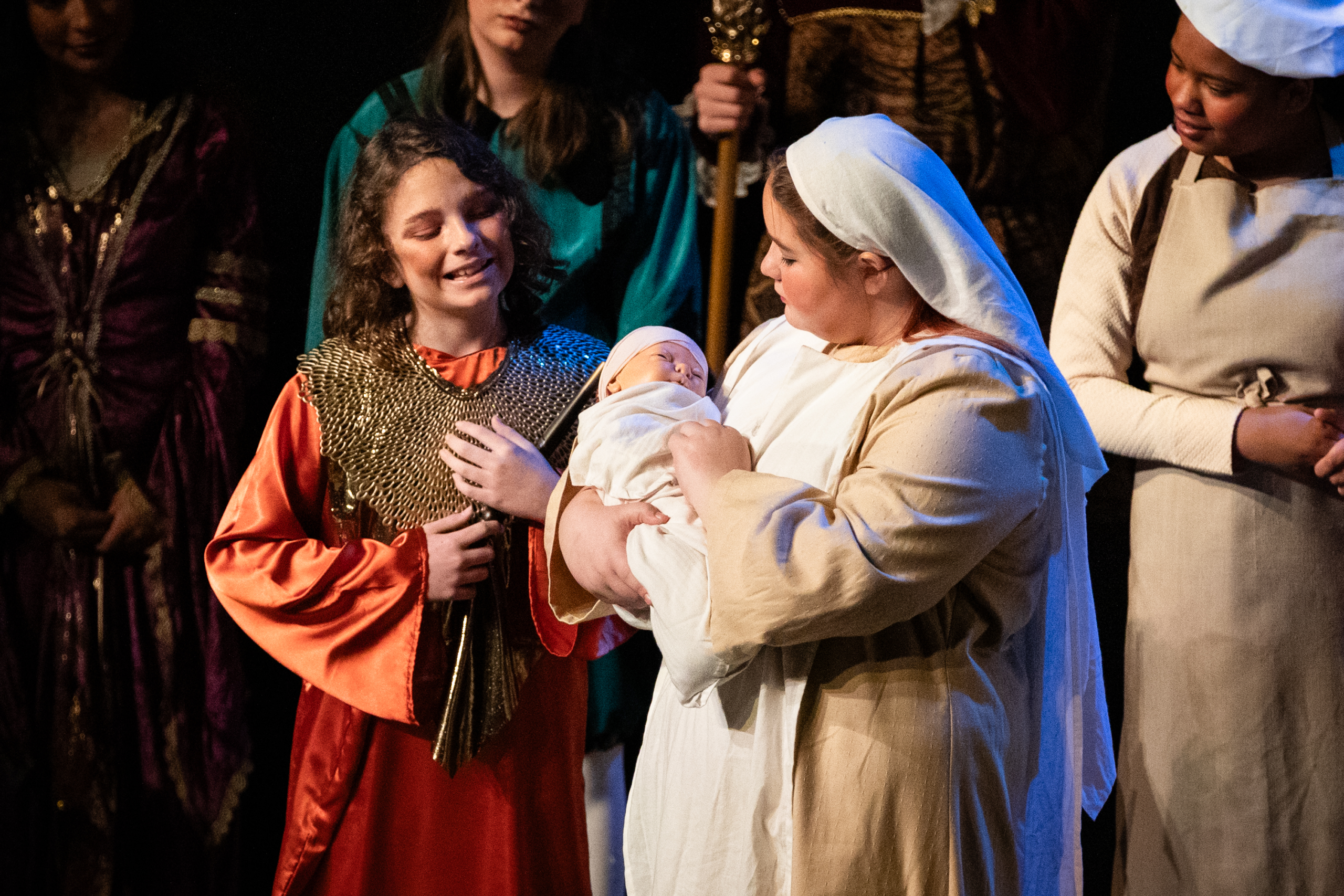
Last spring, my 11-year-old declared he wanted to “learn acting.” One casual interest, I thought. Cute.
Cut to two weeks later and we’re in a theater watching his first ever musical production by a local theater group. By the time we left, he cared about nothing else. He loved the idea of being a part of creating something so wonderful. A month later, he was taking theater classes with that same group. Learning massive social skills that will benefit him for life, making friends, and finding a deeper fascination with how the world of theater is created – behind the scenes, on stage, etc.
Within 6 months (just a couple weeks ago) he was in his first major musical! Now he is writing his own play and plans to invite fellow actors to come together to help him perform it!
Not to mention how theater has woven into his interest in developing. He is also creating his play as an online production in a game developing platform that he has been in working in for a while. He plans to share that with his current Youtube following.
And it all blossomed from a simple interest we leaned into.
Did I assign any of this? Absolutely not.
Was he learning? Oh, deeply.
Was I also learning? Yes!
How to Ease Into Unschooling (Softly)
If you’re curious but not ready to leap headfirst into the non-curriculum universe, here’s a gentle start:
1. Observe before changing anything.
What fascinates your child? What do they choose when nobody’s directing them? It does not matter what it is. Everything has value! Even TV and video games. It just takes a little assistance to invite deeper learning opportunities.
2. Add invitations, not requirements.
Set out interesting books, supplies, puzzles, or nature objects. No pressure.
3. Try “interest windows.”
If they’re into dinosaurs this week, lean into it—documentaries, fossils, dino cookies, the whole Jurassic buffet.
4. Loosen the reins where it feels safe.
Maybe math stays structured for now, but reading or science becomes more open-ended.
5. Trust the process, but also keep your common sense.
If your child thrives with structure, embrace that. Unschooling isn’t anti-structure. It’s anti-forced structure.
The Cozy Heart of Unschooling
What makes unschooling appealing to so many families isn’t the absence of lesson plans. It’s the presence of connection, curiosity, and calm.
It’s learning that doesn’t feel like a battle.
It’s childhood that isn’t rushed.
It’s education that grows from the inside out instead of the top down.
And yes, it’s messy sometimes. Glitter-in-the-grout messy. Doing-when-you-don’t-feel-like-it messy. But it’s also deeply rewarding to watch kids discover who they are while discovering how the world works. No bullies. Less pressure. The ability to be who they are as humans.
If your heart is tugging toward unschooling – or even just a lighter, gentler version of homeschooling – consider this your permission slip to explore it your way. Not the internet’s way. Not the purist’s way. Not the school’s way.
Your way.
It really really isn’t scary. You’re not ruining your kid’s future, I promise!
And who knows? Along the path, you may just learn a little something too.
